Well Pleased / Matthew 3:13–15 / Pr. Ted A. Giese / Sunday January 11th 2026/ Baptism of Our Lord / Mount Olive Lutheran Church
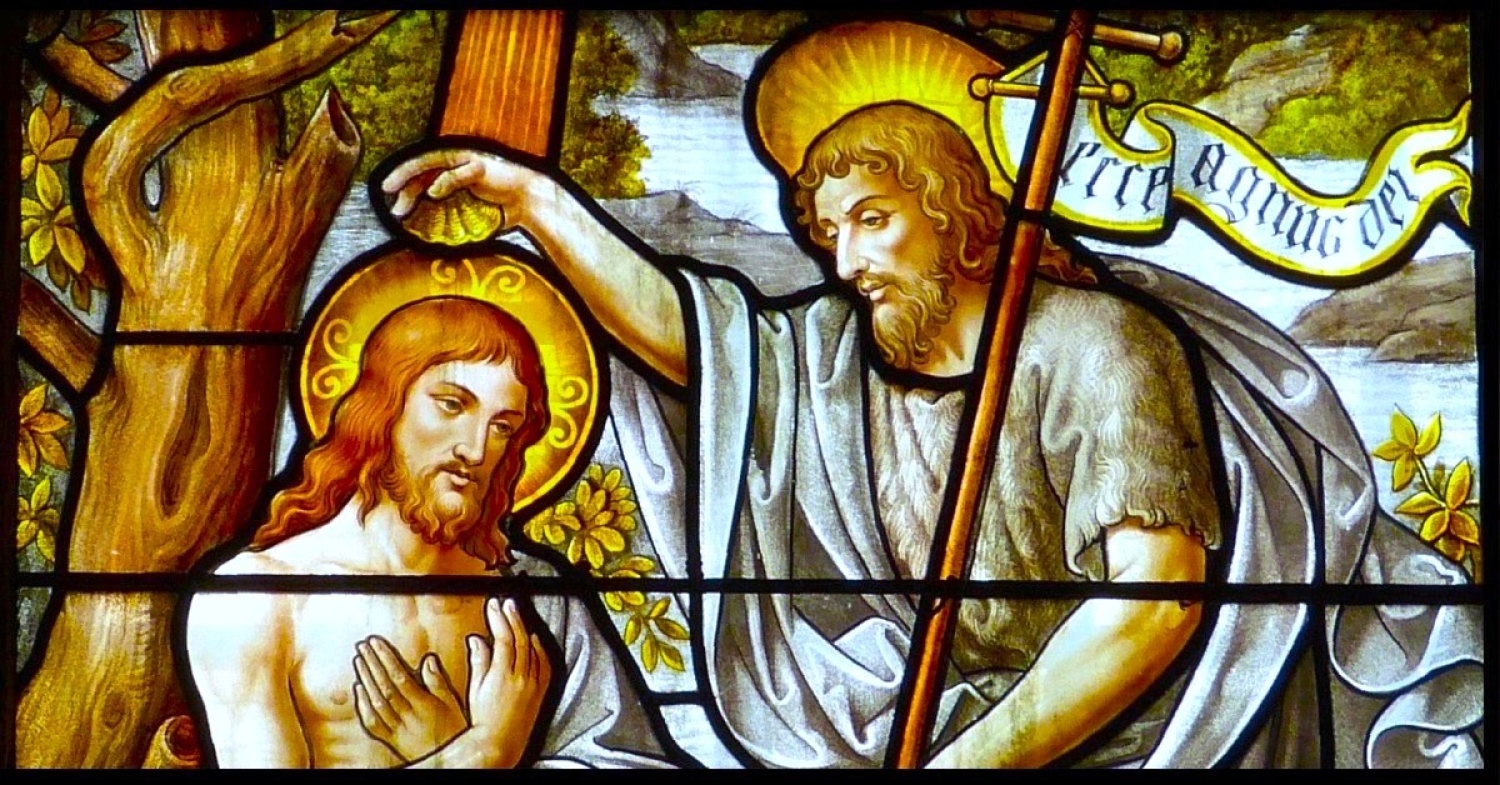
Mount Olive Lutheran Church / Pr. Ted A. Giese / Sunday January 11h 2026: Season of Epiphany / Matthew 3:13–15 “Well Pleased”
“Then Jesus came from Galilee to the Jordan to John, to be Baptised by him. John would have prevented [Jesus], saying, “I need to be Baptised by You, and do You come to me?” But Jesus answered him, “Let it be so now, for thus it is fitting for us to fulfill all righteousness.” Then [John] consented. And when Jesus was Baptised, immediately He went up from the water, and behold, the heavens were opened to Him, and He saw the Spirit of God descending like a dove and coming to rest on Him; and behold, a voice from heaven said, “This is My beloved Son, with whom I am well pleased.”
Let us pray: May the words of my mouth and the meditations of all our hearts be acceptable in Your sight O Lord. Amen.
Grace peace and mercy to you from God our Father and from our Lord and Saviour Jesus Christ. Good Christian Friends. “My God, My God, why have you forsaken Me?”[1] The loud words of Jesus cried out upon the cross just minutes before He died. The last words Jesus spoke before His Resurrection from the dead. A startling question coming from the Son of God, a startling question coming from the One who just three years or so earlier, stood in the Jordan River, Baptised by John the Baptiser, the One upon Whom the Holy Spirit descended like a Dove, the One about whom God the Father had said “This is My beloved Son, with whom I am well pleased.”[2] What happened? Jesus committed no sin: how did He go from being the One with whom God the Father was “well pleased” to being forsaken, wretched upon the cross, nails piercing His flesh, suffocating as He struggled, with onlookers insulting and taunting Him. ‘What happened?’
Saint Paul writes in his Letter to the Romans, “the wages of sin is death”[3] Sin is what happened; sin breaks every good relationship. But it wasn’t Jesus’ sin that put Him on the cross – it was your sin, it’s my sin, it’s the sin committed by children as yet unborn: All the sin, of all the people, through all time: that’s what took Jesus from favoured to forsaken.
‘Pastor I thought we were gonna be looking at Jesus’ baptism?’ Have you ever wondered why Jesus needed to be Baptised? Baptism washes away sin and since Jesus had no sin, even being conceived and born with no sin, what was the use of Him being Baptised? Jesus wasn’t Baptised for Himself. Jesus was Baptised for us: there are two reasons, both of them are for our benefit.
First: This is the Season of Epiphany and an epiphany is a revelation, a sudden flash of clarity in a world of confusion: in the Church we celebrate this and the Baptism of Jesus is one of those moments. At His Baptism the curtains of darkness are drawn back and the heavens open and there is Jesus coming up from the water, the Holy Spirit descending, and the voice of God our Father in Heaven calling out: and suddenly an epiphany is experienced. Jesus knew who He was, this revelation was not a startling epiphany for Him; the Gospel of Saint John describes it as a confirming revelation for John the Baptiser, John confesses how at the Baptism of Jesus he “saw the Spirit descend from heaven like a dove, and it remained on Him.” [John says] “I myself did not know Him, but He who sent me to Baptise with water said to me, ‘He on whom you see the Spirit descend and remain, this is He who Baptises with the Holy Spirit.’ And I have seen and have borne witness that this is the Son of God.”[4] John the Baptiser then preached this to the people around him at the Jordan River, and through the transmission of Scripture and the public reading of it and preaching this epiphany has been passed down to those who were to come – right down to us – and God willing to those who come after us until the return of Christ on The Last Day. At the Jordan River God in Heaven verifies again who Jesus is for us.
Second: Jesus was Baptised because He stands in for us – He stands in for you in your place – we’re all together through time living under that same law of God and in order to save us Jesus Himself needed to be under the law as we are, and in being Baptised Jesus was ‘fulfilling all righteousness’ in our place. It is the same reason He was circumcised and presented at the Temple; this is another way in which Jesus was walking in our shoes, standing in our place.
What does it mean to be under the law? Generaly we understand what it means to live under the law of the Land in Canada. Our Nation’s laws, our local laws, are based in part on The Ten Commandments,[5] but our society has mostly emphasized sins that they can prove by observation and de-emphasized sins that can’t easily be proven. For instance, on the one hand, the 9th and 10th Commandments are about coveting your neighbour’s possessions or his or her spouse or anything that belongs to them, and since this is hard to prove people aren’t ticketed for coveting like they are for breaking the speed limit because how can someone with certainty accurately know what someone is thinking at any given moment. But, on the other hand, take the 5th Commandment, with murder there is a body or a missing person, there is a crime scene; how would you cordon off the scene of a crime if the crime was coveting … would you use police tape and bring in the CSI unit into a person’s mind, into their thoughts and feelings? … now if the coveting metastasized into greed that leads the person to steal what isn’t theirs well that could quickly become a crime, a crime with a crime scene, with finger prints and physical evidence, CCTV footage.
When people start to judge their goodness based on muddling up the laws of the Land with the law of God they may ask themselves: “Did I shoplift today? No, check off not stealing from the list. Did I cause anyone’s death today? No, check of ‘thou shalt not murder’ from the list.” If you’re not getting arrested, if you’re not going to jail then you must be doing all right, right?
As it turns out, the law of God is harder to follow than the laws of the Land, they are much more demanding, in fact there is no one here who can follow the law of God without fault, myself included. Jesus would later make the spirit of the law of God very clear when He taught saying, “You have heard that it was said to those of old, ‘You shall not murder; and whoever murders will be liable to judgment.’ But I say to you that everyone who is angry with his brother will be liable to judgment; whoever insults his brother will be liable to the council; and whoever says, ‘You fool!’ will be liable to the hell of fire.”[6] He does the same thing with the 6th Commandment when He teaches, “You have heard that it was said, ‘You shall not commit adultery.’ But I say to you that everyone who looks at a woman with lustful intent has already committed adultery with her in his heart.”[7] The police may not be able to give you a ticket for lust or anger but God sees your heart and knows when you have broken His law. And so Jesus was not simply living under the laws of the Roman Empire in the Province of Judea; Jesus wasn’t only accountable to the ceremonial laws of the Jewish people handed down to them by God through Moses in the Old Testament, Jesus in His incarnation was standing with us under the very law of God that transcends all boarders and all time.
As Jesus hung up on the cross of His crucifixion He had on both sides of Him condemned criminals.[8] They with Jesus were receiving the same punishment of death. What their crime was specifically we do not know. They are often referred to as thieves; they may have been part of Barabbas’ murderous insurrection against the Roman government.[9] Saint John described Barabbas – the man Pontius Pilot released instead of Jesus at the insistence of the mob – as a robber and bandit.[10] So if we do take these two men crucified with Jesus to be thieves we can say that for thieves things have changed; because of Jesus western civilization treats it’s criminals differently, thieves are incarcerated, they serve a prison sentence and are rehabilitated (in theory. Does it always work? No, but it is based on the concept of forgiveness) Even to this day there are places governed by different principles in the world where theft results in the loss of your right hand: a practice that is based on punishment and lifelong public humiliation, not based on forgiveness and possible rehabilitation. Christian communities haven’t always been perfect when it comes to punishing crime, but where the example of Christ is most closely followed people tend to air on the side of grace and mercy.
This all shows the difficulties of ‘being under the law’ and following the law perfectly – the law of the land at any given time influenced by the law of God is complex and demanding and always has been.
Dear ones it isn’t enough to be a good citizen without an arrest warrant or criminal record or without parking or driving infractions in the land you live in because as Saint Paul teaches “our citizenship is in heaven,[11] as Christians we live first and foremost in the Kingdom of God. Jesus therefore as the Word of God who took on flesh entered into a human life and lived it out – a real life lived out under the law of man and the Law of God, lived out with all its temptations and difficulties; He didn’t get a free pass because He was God’s only begotten and beloved Son. On the Cross, that’s the spot where all of our sins covered Him and with the concentration of all that sin, every broken law, every broken godly law of the land, every broken law of God, at that moment … at that very moment the relationship between Father and Son was broken not because of any fault of Jesus’ but on account of our faults. And so Jesus, standing in for us under the law of God, looked up and called out, to the One who was so ‘well pleased’ with Him at the Jordan River, and while in physical anguish cries out, “My God, My God, why have You forsaken Me?” At the Cross the heavens don’t open and no voice calls out with an answer. Jesus dies trusting in His Father’s mercy and power to save[12] and His lifeless body is buried. When we feel alone in the deep wrestling with evil that happens in our souls we too may ask this same question, when we are mired in our sin. Dear ones remember, where we are weak in this life, Jesus is and ever will be strong:[13] Strong to save. Trust in Him.
In the Gospel of Saint John Jesus tells His disciples that, “For this reason the Father loves Me, because I lay down My life that I may take it up again. No one takes it from Me, but I lay it down of My own accord. I have authority to lay it down, and I have authority to take it up again. This charge I have received from My Father.”[14]
Because “the wages of sin is death” and because Jesus takes on our sin in our place then He must receive the wage for our sin, the wage we originally earned by our sins: this is what ‘fulfilling all righteousness’ is, what it looks like in action. This is why Jesus is Baptised. We share our baptism with Him; we are Baptised in His Name and by His command: As we heard in our Epistle, “Do you not know that all of us who have been Baptised into Christ Jesus were Baptised into His death? We were buried therefore with Him by baptism into death, in order that, just as Christ was raised from the dead by the glory of the Father, we too might walk in newness of life.”[15]
What is Baptism for us? “Baptism … now saves you,” Saint Peter teaches, “not as a removal of dirt from the body but as an appeal to God for a good conscience, through the resurrection of Jesus Christ,”[16] Your good conscience rests in knowing and trusting that your sins died with Jesus at His Good Friday Cross and are now atoned for by Jesus’ shed blood and death.
‘What does being Baptised mean for me today?’ First it means your sin is washed away in Christ. As Baptised Christians you are given this new identity of a child of God. When our heavenly Father looks at you, He now sees Jesus His Son. When we repentantly ask for forgiveness in the name of Jesus our heavenly Father sees Jesus covering us with His righteousness, the same Jesus who has conquered sin and defeated its power to kill.
As part of your baptism you’re now outfitted with the armor of God[17] both for your protection and for the living out of your life as a Christian: from week to week we are battered up, beat down with sin, your armor gets dented and busted and rusty and worn but here in this place your battle weary bodies come, you bring that dented knocked around and broken armor back here and by the mercy and grace and love of God, your pastors over the years have been given to you to be your black smiths, your armourers: We’ve been called to sharpen your sword, we’ve been charged with the work of hammering out the dints, we’ve been installed here to grind and polish you up, to send you back out onto the battlefield – but you go not alone – you too have received, like Christ, the Holy Spirit in your baptism and He is your comforter in times of trouble. Yet God gives you even more: at this Communion rail you are given the mysterious Body and Blood of Christ Jesus for the strengthening of your soul, and the forgiveness of your sins. Amazingly when you receive it you receive the same Body of Christ that was Baptised to fulfill all righteousness in the River Jordan: the same Body that hung on that Good Friday Cross, the same Body that ascended God the Father and now lives eternally with the Him and the Spirit, one God now and forever.
How did Jesus go from favoured to forsaken: it happened because of our sin – but the life of Jesus did not end there. Jesus’ resurrection from the grave cements for us our relationship with our heavenly Father – a relationship of father and child – a relationship revealed in the waters of the Jordan River when Christ Jesus was Baptised. Now these words first heard by the ears of Jesus and John the Baptiser are not for Jesus only but are for us as well: “This is My beloved Son, with whom I am well pleased.” You are now, in your Baptism, God the Father’s beloved child and in Christ Jesus He is ‘well pleased’ with you and has rescued you from sin and death. Amen.
Let us pray: Lord, have mercy on us, Christ have mercy on us, Lord have mercy on us, “take our minds and think through them, take our lips and speak through them, take our hearts and set them on fire; for the sake of our Lord and Savior Jesus Christ, Amen.”
[1] Matthew 27:46
[2] Matthew 3:17
[3] Romans 6:23
[4] John 1:32–34
[5] The Ten Commandments, Luther’s Small Catechism, Concordia Publishing House 2017, pages 13-15.
[6] Matthew 5:21–22
[7] Matthew 5:27–28
[8] Luke 23:39-43
[9] Luke 23:19
[10] John 18:40
[11] Philippians 3:20
[12] Psalm 22
[13] 1 Corinthians 4:10
[14] John 10:17-18
[15] Romans 6:3-4
[16] 1 Peter 3:21
[17] Ephesians 6:10-18
Photo Credit: Main photo of John of the Baptiser & Jesus church window Burgundy France from pxhere.
Comments


Topics
- Book of Concord (24)
- Congregational Life (2)
- Seasons and Celebrations (Non Religious) (1)
- Theological Terms and Topics (1)
- Show All
- Faith (306)
- Trust (255)
- Death & Dying (210)
- Justification (201)
- Forgiveness (191)
- Imputed Righteousness (164)
- Eternal Life (163)
- Righteousness (154)
- Repentance (137)
- Resurrection (136)
- Faithfulness (130)
- Baptism (123)
- Grace (120)
- Alien Righteousness (118)
- Vocation (116)
- Hope (113)
- Mercy (90)
- Joy (84)
- Wisdom (75)
- Eschatology (75)
- Love (66)
- Incarnation (65)
- Parables (63)
- Pharisees (56)
- Suffering (54)
- Perseverance (52)
- Humility (52)
- Temptation (52)
- Heaven & Hell (51)
- Apologetics (47)
- Fear (42)
- Rejoice (38)
- Sadducees (27)
- Encouragement (25)
- Persecution (25)
- Redemption (24)
- Evangelism (24)
- Truth (22)
- Beatitude (22)
- Patience (20)
- Gratitude (19)
- Vengeance (19)
- Divine Monergism (19)
- Thankfulness (18)
- Sanctification (17)
- Marriage (17)
- Glory (16)
- Occult (15)
- Courage (14)
- Obedience (14)
- Prayer (11)
- Betrayal (9)
- Authority (9)
- Soul (8)
- Omniscience (8)
- Praise (7)
- The Trinity (7)
- Omnipotence (7)
- Hospitality (6)
- Angels and Demons (6)
- Conversion (6)
- Omnipresence (6)
- Exorcism (6)
- Judaism (6)
- Confession of Faith / Public Confession (5)
- Comfort (5)
- Creation (5)
- Good Works (4)
- Idolatry (4)
- Conscience (4)
- Divorce (4)
- Islam (4)
- Coveting / Covetousness (3)
- Reconciliation (3)
- Charity (3)
- Buddhism (3)
- Missionary/Missions (3)
- The Lord's Supper / Holy Communion (2)
- Sin, Sinning & Sinfulness (2)
- Contentment (2)
- Hypocrisy (2)
- Prophecy (1)
- Artificial Intelligence (AI) (1)
- Acedia (1)
- Date (1)
- Articles - Media - Reviews
- Sermon Categories
- Show All
- Sermons (1036)
- Audio Sermons (955)
- Funeral Sermons (183)
- Psalm Sermons (131)
- Away Sermons (40)
- Wedding Sermon (19)
- Pastors & Church Workers (1)
- Show All
- Pastor Ted Giese (878)
- Rev. Lucas Albrecht (231)
- Rev. Terry Defoe (121)
- Guest Preacher (69)
- Vicar James Preus (26)
- Rev. Lowell Dennis (16)
- Rev. Arron Gust (7)
- Rev. Daryl Solie (5)
- Rev. Howard Ulmer (4)
- Rev. Paulo Brum (4)
- Missionary Rev. Kim (4)
- Rev. Nigel Prozenko (2)
- Pastor Basil Christi (1)
- Synod and Regions
- The Bible
- Show All
- ^John (228)
- ^Psalms (202)
- ^Luke (198)
- ^Matthew (185)
- ^Mark (93)
- ^Romans (56)
- ^Isaiah (41)
- ^Acts (38)
- ^1 Corithians (31)
- ^Revelation (25)
- ^Philippians (22)
- ^Genesis (20)
- ^1 John (19)
- ^1 Peter (18)
- ^Hebrews (18)
- ^Ephesians (18)
- ^Colossians (17)
- ^James (15)
- ^2 Corithians (15)
- ^Galatians (13)
- ^Ezekiel (13)
- ^Ecclesiastes (13)
- ^2 Timothy (12)
- ^Deuteronomy (11)
- ^1 Thessolonians (9)
- ^Proverbs (8)
- ^1 Kings (8)
- ^2 Samuel (8)
- ^Exodus (6)
- ^Job (5)
- ^1 Samuel (5)
- ^Titus (4)
- ^1 Timothy (4)
- ^Judges (4)
- ^Numbers (4)
- ^Philemon (3)
- ^Amos (3)
- ^Jeremiah (3)
- ^Nehemiah (3)
- ^Jude (2)
- ^Habakkuk (2)
- ^Micah (2)
- ^Esther (2)
- ^Leviticus (2)
- ^2 Peter (1)
- ^2 Thessolonians (1)
- ^Malachi (1)
- ^Zechariah (1)
- ^Nahum (1)
- ^Jonah (1)
- ^Joel (1)
- ^Hosea (1)
- ^Daniel (1)
- ^Lamentations (1)
- ^2 Chronicles (1)
- Seasons and Festivals
- Show All
- Pentecost (461)
- Lent (194)
- Easter (153)
- Epiphany (145)
- Advent (107)
- Christmas (74)
- Holy Week (41)
- Christmas Eve (22)
- Easter Day (22)
- Palm Sunday (20)
- Reformation Day (18)
- Transfiguration (18)
- Good Friday (16)
- All Saints Day (16)
- Pentecost Sunday (16)
- Thanksgiving (15)
- Trinity Sunday (15)
- Christ the King Sunday (13)
- Maundy Thursday (13)
- Ash Wednesday (12)
- Baptism of Our Lord (10)
- Feast of Saint Michael and all Angels (2)
- Ascension Day (1)
- Purification of Mary & Presentation of Our Lord (1)