Blessed in Christ / Matthew 5:1-12 / Pr. Ted A. Giese / Sunday February 1st 2026/ Season of Epiphany / Mount Olive Lutheran Church
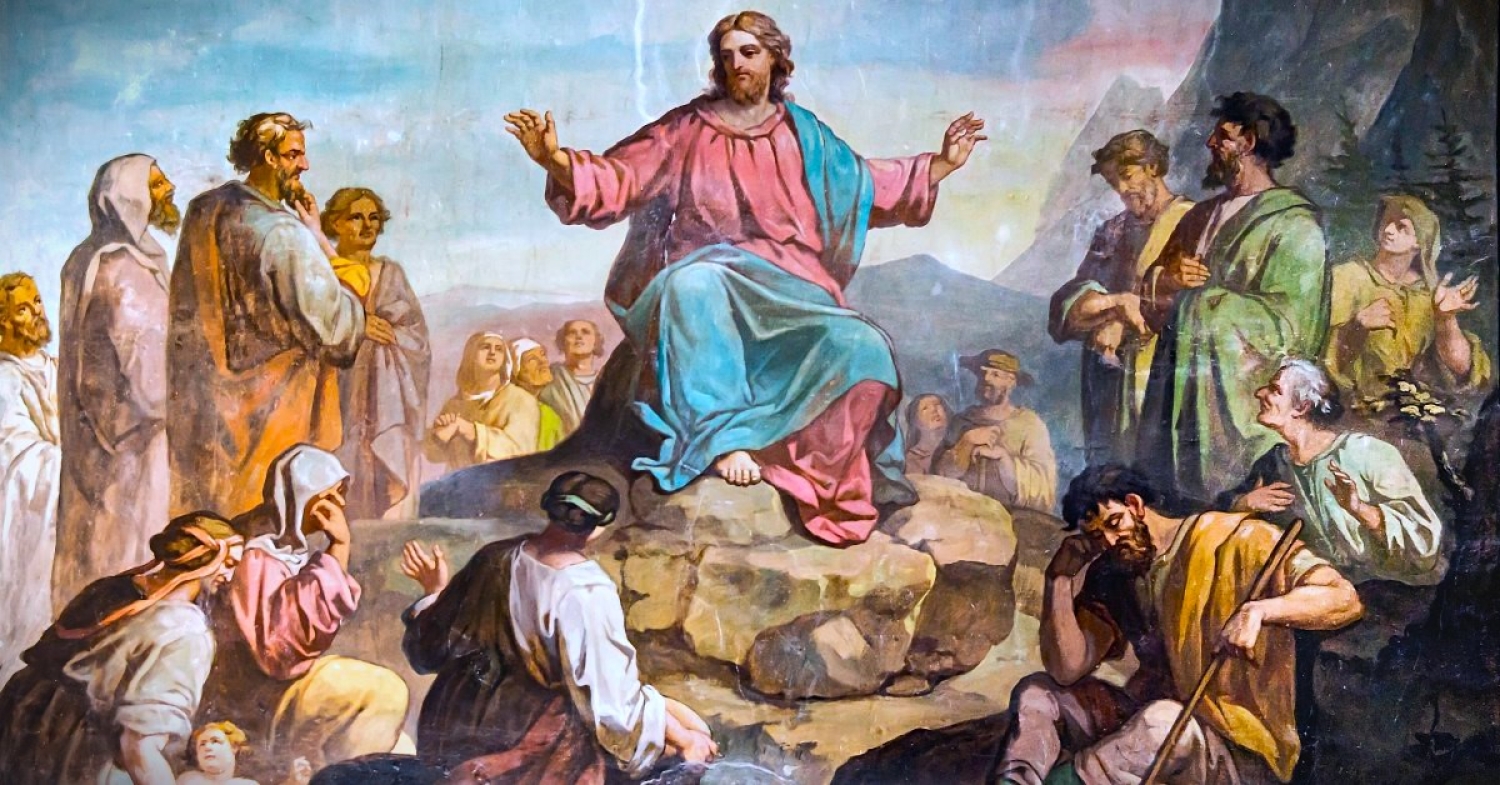
Mount Olive Lutheran Church / Pr. Ted A. Giese / Sunday February 1st 2026: Season of Epiphany/ Matthew 5:1-12 “Blessed in Christ”
Seeing the crowds, [Jesus] went up on the mountain, and when He sat down, His disciples came to Him.
And He opened His mouth and taught them, saying:
“Blessed are the poor in spirit,
for theirs is the kingdom of heaven.
“Blessed are those who mourn, for they shall be comforted.
“Blessed are the meek, for they shall inherit the earth.
“Blessed are those who hunger and thirst for righteousness,
for they shall be satisfied.
“Blessed are the merciful, for they shall receive mercy.
“Blessed are the pure in heart, for they shall see God.
“Blessed are the peacemakers,
for they shall be called sons of God.
“Blessed are those who are persecuted for righteousness’ sake,
for theirs is the kingdom of heaven.
“Blessed are you when others revile you and persecute you and utter all kinds of evil against you falsely on My account. Rejoice and be glad, for your reward is great in heaven, for so they persecuted the prophets who were before you.
Let us pray: May the words of my mouth and the meditations of all our hearts be acceptable in Your sight O Lord. Amen.
Grace peace and mercy to you from God our Father and from our Lord and Saviour Jesus Christ. Good Christian Friends today is a great day for showing how Scripture interconnects with Scripture; how one passage helps reveal best what another passage means. Essentially when studying Scripture it is always good to consider what you’re looking at in light of other passages and to read around the text that you are looking at to see if the context, the circumstance, the setting, the rest of the passage provides help in better revealing what’s right there before you. This is especially important with Jesus’ words in Matthew 5, His sermon on the mount: The Beatitudes that we have before us today.
This is important because the Beatitudes have long been turned into a sort of to-do-list, a set of Christian marching orders, where the cart is set before the horse. When applied to men and women and children, in that way, they stop being something that grows out of the Christian life a quickly become something that define a Christian life; when this happens they can easily become a crushing rock set upon their backs. Go be a peacemaker, go be meek, go be merciful, go be pure in heart, yet Jesus says, “out of the heart come evil thoughts, murder, adultery, sexual immorality, theft, false witness, slander.”[1] There is nothing peaceful, meek, or merciful, or pure in heart about any of that. If these beatitudes become a list of how a person becomes holy, sanctified before God, the very benchmark requirement needed to receive blessings from God, to see God, to have the Kingdome of God and not the result of being made holy, and sanctified by God from which blessings naturally flow in the Christian life, then they can fast become a crushing weight because people sin, because even Christians sin: Jesus is right, we are not pure in heart, we have been disturbers not peacemakers, we can be cruel and careless; when life calls for meekness crouching at the door is the temptation to be become hard and belligerent.
Christ says that faithfully suffering persecution is rewarding, yet many people can’t even suffer one small slight, one small insult, one small backhanded comment against their person let alone against their faith, they quickly become impatient irritable and rude right back at the ones who first insulted them. Instead of resisting the one who is evil, they are tempted not to “turn the other cheek”[2] but to punch back with words, maybe even with fists. Quickly it becomes clear that even those that the World would point to and say, ‘look at him, look at her, aren’t they great, aren’t they the best of us,’ even those are incapable of always being good, they cannot always, “do justice,” they do not always, “love kindness,” they don’t consistently, daily, with every footstep, “walk humbly with [their] God.”[3] Who can do this? Who does this?
Our Old Testament reading says that this very thing is what God requires, that you are, “to do justice, to love kindness, and to walk humbly with your God.” In fact at the beginning of that Old Testament reading today it’s made clear that when we break God’s law it is not just broken against our neighbour but against God Himself. It is not God who wearies us, it is us who weary Him with our sin, and all the earth hears the indictment that God has against us, the mountains and the hills hear the voice of the Lord and it is an air-tight case which is pleaded against us. Don’t sweep aside the detail that comes at the beginning of our Gospel reading, when Saint Matthew says how, “Seeing the crowds, [Jesus] went up on the mountain, and when He sat down, His disciples came to Him. And He opened His mouth and taught them, saying …” Yes, the very mountain upon which Jesus sits hears the same words spoken by Jesus in the Beatitudes, the hills become a witness to this list which people fail to live up to by their own will, reason, or strength.
That is why each time we gather together we ask for forgiveness, pointing out that we have not kept God’s law; that we have fallen down; fallen into sin with our thoughts, words, and deeds. These very things listed in the Beatitudes could be used to gauge how well we have kept God’s law. And that would be, as presented, an appropriate way to look at what Christ says here. But there is more, in the same Sermon on the Mount just a bit further ahead in chapter five of Matthew’s Gospel, Jesus says, “Do not think that I have come to abolish the Law or the Prophets; I have not come to abolish them but to fulfill them.”[4] And here’s why we have this reading presented to us now in the Season of Epiphany. The Epiphany for you today provided in Jesus’ Sermon on the Mount in these Beatitudes is that Jesus in His incarnation is revealing Himself as the one who fulfils this list for you, for all peoples, for all time. He fulfills the Law of God in your place. Jesus is the horse and we are all together riding in the cart. Don’t put the cart before the horse.
Jesus is blessed: At His baptism the voice of God the Father rang out saying, “This is My beloved Son, with whom I am well pleased.”[5] Jesus is blessed. Jesus is not rich by the Worlds standards, along the way to His cross and passion Jesus is looked down upon by the majority of the wealthy Pharisees and Sadducees, the opulent and politically connected chief priests. They along with the scribes and elders of the people don’t see Him as one who is rich in spirit rather they see Jesus as one who is poor in spirit because He “eats with sinners and tax collectors,”[6] at the grave of His dead friend Lazarus Jesus wept making Himself one with those who mourn.[7] When He was tempted in His physical hunger to turn stones into bread in the wilderness[8] Jesus turned to the righteous bread of God’s Word and waited on the Lord to be satisfied,[9] He was merciful towards the sick and the needy even when they were not insiders, when they were outsiders.[10] In His ultimate persecution Jesus was faithful to the end, “for the joy that was set before Him [Jesus] endured the cross, despising the shame, and is seated at the right hand of the throne of God.”[11] He went to that cross of His Good Friday crucifixion at mount Calvary, at the hill called the Skull, Golgotha, with perfect meekness. Isaiah prophesied of this saying, “He was oppressed, and He was afflicted, yet He opened not His mouth; like a lamb that is led to the slaughter, and like a sheep that before its shearers is silent, so He opened not His mouth.”[12] At the cross Jesus took upon His pure heart the sin that flows so readily from our impure heart, our impure lips, impure minds, impure hands: Saint Peter describes it like this in 1st Peter chapter two, when he writes how, “[Jesus] Himself bore our sins in His body on the tree, that we might die to sin and live to righteousness. By His wounds you have been healed.”[13] (Saint Peter quotes Isaiah there at the end of what he says) Yes at the cross of His crucifixion Jesus becomes the peacemaker, Saint Paul in his letter to the Christians of Rome writes that, “While we were enemies we were reconciled to God by the death of His Son, much more, now that we are reconciled, shall we be saved by His life.”[14] We are saved by Jesus’ death and by His life. He makes peace between you and God.
The case that God brings against you in Micah chapter 6, the full weight of God’s law, at the cross is brought against Jesus. He hangs there nailed to the cursed wood of the tree of the cross[15] in all meekness and righteousness cursed by God in our place,[16] and as Isaiah says, “He was pierced for our transgressions; He was crushed for our iniquities; upon Him was the chastisement that brought us peace, and with His wounds we are healed”[17] (there’s that last part Saint Peter quotes). Dear ones, you have not earned the justification that Christ won for you at the cross of His crucifixion, all the same He now gives this justification to you as a gift. He gives you His pure heart in exchange for your impure heart; He gives you the words of His mouth in exchange for your impure lips; Saint Paul says that we as Christians we have the mind of Christ in exchange for our impure minds;[18] in Christ our eternal life is no longer held in our impure hands but in the nail pierced Hand of Jesus Christ our Saviour and Redeemer. Dear ones, because of Christ you will see God, because of Christ the blessings that God the Father gave Him in life and the blessings God the Father gave Him in His resurrection are now given to you as a gift: Yours is kingdom of heaven – it belongs now to you as an inheritance, and it is yours today. You shall be comforted; When Christ makes all things new on The Last Day you shall inherit the earth, on That Day you shall be satisfied, you shall receive mercy. In your baptism and in the blood of Christ you are now children of God and you are free to be merciful, and meek and peaceful and hungry and thirsty for God’s word, and pure of heart because these requirements have been fulfilled in Christ.
You can now embrace these Beatitudes not as a laundry list of things to do to gain blessings but as an open door to a life lived out in Christ. When you have this you can live your life to the glory of God and the good of your neighbour no longer caring if the World looks down on you or persecutes you, because holding fast to them is holding fast to Jesus who did them all perfectly.
This is why Saint Paul in our Epistles reading today says that, “God chose what is foolish in the World to shame the wise; God chose what is weak in the World to shame the strong; [God] chose what is low and despised in the World, even things that are not, to bring to nothing things that are, so that no human being might boast in the presence of God. And because of Him you are in Christ Jesus, who became to us wisdom from God, righteousness and sanctification and redemption, so that, as it is written, “Let the one who boasts, boast in the Lord.”[19] As an example, as a teaching tool, in this way even a crucifix — which is often despised by the World — becomes a visual reminder to memorialize and focus our attention on what Saint Paul declares in our Epistle reading today, “we preach Christ crucified, a stumbling block to Jews and folly to Gentiles.”[20] The Cross, the Crucifix then need not be a shameful thing for the Christian but rather becomes our boast in Christ and what He has done for us. It is certainly not about tallying up what good things we have done for Him, the only thing we add to Christ upon the cross is our sin. It’s simply a visual reminder of the cost of sin and all the good things He has done for us.
We then do not aim to boast in how meek we are, how peaceful we are, how merciful, or pure in heart we are but in how Christ is all of these things for us, He is all of these things for you. Dear ones when we remember the faultless, sinless life of Christ Jesus lived out for us unto death the Beatitudes are no longer a heavy weight crushing us as a list of demands for your Lord Jesus says, “Come to Me, all who labour and are heavy laden, and I will give you rest.” Jesus says to you today, “Take My yoke upon you, and learn from Me, for I am gentle and lowly in heart, and you will find rest for your souls. For My yoke is easy, and My burden is light.”[21] By fulfilling the Beatitudes He makes the burden light, you are now free to live your lives in praise of God, and for the benefit of your neighbour and in repentance to turn to Him always who will lift the weight of sin off of you and give you His peace. Amen.
Let us pray: Lord have mercy on us, Christ have mercy on us, Lord have mercy on us, “take our minds and think through them, take our lips and speak through them, take our hearts and set them on fire; for the sake of our Lord and Saviour Jesus Christ, Amen.
[1] Matthew 15:19
[2] Matthew 5:39
[3] Micah 6:8
[4] Matthew 5:17
[5] Matthew 3:17
[6] Matthew 9:11
[7] John 11:35
[8] Matthew 4:1-4
[9] Matthew 4:11
[10] Matthew 15:21-28
[11] Hebrews 12:2
[12] Isaiah 53:7
[13] 1 Peter 2:24
[14] Romans 5:10
[15] Galatians 3:13
[16] Deuteronomy 21:23
[17] Isaiah 53:5
[18] 1 Corinthians 2:16
[19] 1 Corinthians 1:27-31
[20] 1 Corinthians 1:23
[21] Matthew 11:28-30
Photo Credit: Main Photo Église Saint-Martin de Castelnau-d'Estrétefonds - Le Sermon sur la montagne par Robert Arsène from wikimedia commons.
Comments


Topics
- Book of Concord (24)
- Congregational Life (2)
- Seasons and Celebrations (Non Religious) (1)
- Theological Terms and Topics (1)
- Show All
- Faith (306)
- Trust (255)
- Death & Dying (210)
- Justification (201)
- Forgiveness (191)
- Imputed Righteousness (164)
- Eternal Life (163)
- Righteousness (154)
- Repentance (137)
- Resurrection (136)
- Faithfulness (130)
- Baptism (123)
- Grace (120)
- Alien Righteousness (118)
- Vocation (116)
- Hope (113)
- Mercy (90)
- Joy (84)
- Wisdom (75)
- Eschatology (75)
- Love (66)
- Incarnation (65)
- Parables (63)
- Pharisees (56)
- Suffering (54)
- Perseverance (52)
- Humility (52)
- Temptation (52)
- Heaven & Hell (51)
- Apologetics (47)
- Fear (42)
- Rejoice (38)
- Sadducees (27)
- Encouragement (25)
- Persecution (25)
- Redemption (24)
- Evangelism (24)
- Truth (22)
- Beatitude (22)
- Patience (20)
- Gratitude (19)
- Vengeance (19)
- Divine Monergism (19)
- Thankfulness (18)
- Sanctification (17)
- Marriage (17)
- Glory (16)
- Occult (15)
- Courage (14)
- Obedience (14)
- Prayer (11)
- Betrayal (9)
- Authority (9)
- Soul (8)
- Omniscience (8)
- Praise (7)
- The Trinity (7)
- Omnipotence (7)
- Hospitality (6)
- Angels and Demons (6)
- Conversion (6)
- Omnipresence (6)
- Exorcism (6)
- Judaism (6)
- Confession of Faith / Public Confession (5)
- Comfort (5)
- Creation (5)
- Good Works (4)
- Idolatry (4)
- Conscience (4)
- Divorce (4)
- Islam (4)
- Coveting / Covetousness (3)
- Reconciliation (3)
- Charity (3)
- Buddhism (3)
- Missionary/Missions (3)
- The Lord's Supper / Holy Communion (2)
- Sin, Sinning & Sinfulness (2)
- Contentment (2)
- Hypocrisy (2)
- Prophecy (1)
- Artificial Intelligence (AI) (1)
- Acedia (1)
- Date (1)
- Articles - Media - Reviews
- Sermon Categories
- Show All
- Sermons (1036)
- Audio Sermons (955)
- Funeral Sermons (183)
- Psalm Sermons (131)
- Away Sermons (40)
- Wedding Sermon (19)
- Pastors & Church Workers (1)
- Show All
- Pastor Ted Giese (878)
- Rev. Lucas Albrecht (231)
- Rev. Terry Defoe (121)
- Guest Preacher (69)
- Vicar James Preus (26)
- Rev. Lowell Dennis (16)
- Rev. Arron Gust (7)
- Rev. Daryl Solie (5)
- Rev. Howard Ulmer (4)
- Rev. Paulo Brum (4)
- Missionary Rev. Kim (4)
- Rev. Nigel Prozenko (2)
- Pastor Basil Christi (1)
- Synod and Regions
- The Bible
- Show All
- ^John (228)
- ^Psalms (202)
- ^Luke (198)
- ^Matthew (185)
- ^Mark (93)
- ^Romans (56)
- ^Isaiah (41)
- ^Acts (38)
- ^1 Corithians (31)
- ^Revelation (25)
- ^Philippians (22)
- ^Genesis (20)
- ^1 John (19)
- ^1 Peter (18)
- ^Hebrews (18)
- ^Ephesians (18)
- ^Colossians (17)
- ^James (15)
- ^2 Corithians (15)
- ^Galatians (13)
- ^Ezekiel (13)
- ^Ecclesiastes (13)
- ^2 Timothy (12)
- ^Deuteronomy (11)
- ^1 Thessolonians (9)
- ^Proverbs (8)
- ^1 Kings (8)
- ^2 Samuel (8)
- ^Exodus (6)
- ^Job (5)
- ^1 Samuel (5)
- ^Titus (4)
- ^1 Timothy (4)
- ^Judges (4)
- ^Numbers (4)
- ^Philemon (3)
- ^Amos (3)
- ^Jeremiah (3)
- ^Nehemiah (3)
- ^Jude (2)
- ^Habakkuk (2)
- ^Micah (2)
- ^Esther (2)
- ^Leviticus (2)
- ^2 Peter (1)
- ^2 Thessolonians (1)
- ^Malachi (1)
- ^Zechariah (1)
- ^Nahum (1)
- ^Jonah (1)
- ^Joel (1)
- ^Hosea (1)
- ^Daniel (1)
- ^Lamentations (1)
- ^2 Chronicles (1)
- Seasons and Festivals
- Show All
- Pentecost (461)
- Lent (194)
- Easter (153)
- Epiphany (145)
- Advent (107)
- Christmas (74)
- Holy Week (41)
- Christmas Eve (22)
- Easter Day (22)
- Palm Sunday (20)
- Reformation Day (18)
- Transfiguration (18)
- Good Friday (16)
- All Saints Day (16)
- Pentecost Sunday (16)
- Thanksgiving (15)
- Trinity Sunday (15)
- Christ the King Sunday (13)
- Maundy Thursday (13)
- Ash Wednesday (12)
- Baptism of Our Lord (10)
- Feast of Saint Michael and all Angels (2)
- Ascension Day (1)
- Purification of Mary & Presentation of Our Lord (1)