“Forgiveness in the Family” Sunday Sermon / Mount Olive Lutheran Church / September 13th 2026 Season of Pentecost / Pr. Ted A. Giese / Genesis 50:15–21
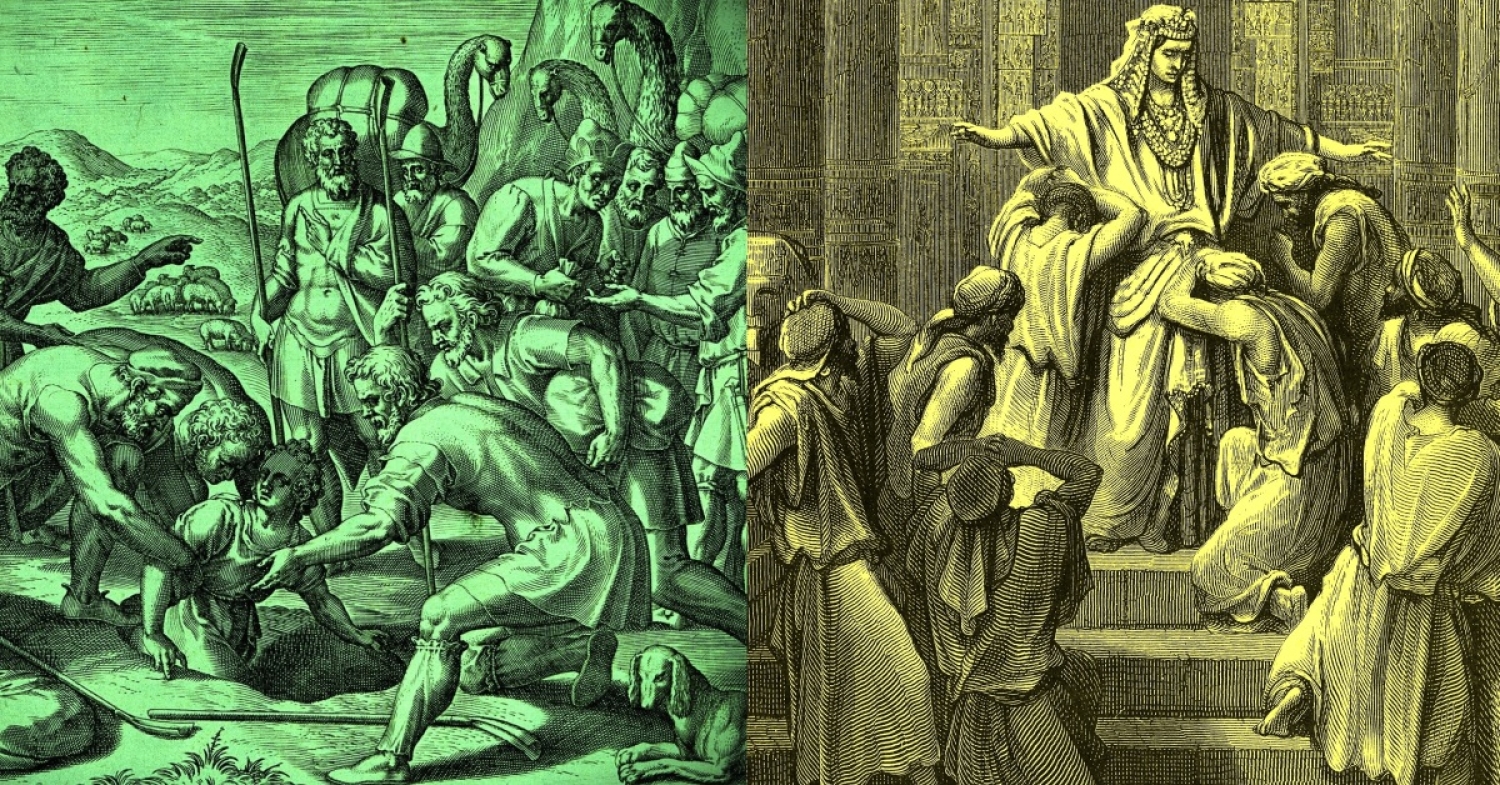
Mount Olive Lutheran Church / Pr. Ted A. Giese / Sunday September 13th 2026: Season of Pentecost / Genesis 50:15–21 “Forgiveness in the Family – How Many Times Should I Forgive my Brother?”
When Joseph’s brothers saw that their father was dead, they said, “It may be that Joseph will hate us and pay us back for all the evil that we did to him.” So they sent a message to Joseph, saying, “Your father gave this command before he died: ‘Say to Joseph, “Please forgive the transgression of your brothers and their sin, because they did evil to you.”’ And now, please forgive the transgression of the servants of the God of your father.” Joseph wept when they spoke to him. His brothers also came and fell down before him and said, “Behold, we are your servants.” But Joseph said to them, “Do not fear, for am I in the place of God? As for you, you meant evil against me, but God meant it for good, to bring it about that many people should be kept alive, as they are today. So do not fear; I will provide for you and your little ones.” Thus he comforted them and spoke kindly to them.
Let us pray: May the words of my mouth and the meditations of all our hearts be acceptable in Your sight O Lord. Amen.
Grace peace and mercy to you from God our Father and from our Lord and Saviour Jesus Christ. Good Christian Friends back at the beginning of August I preached a sermon about the twins Jacob and Esau and the passing of the birthright to the younger of the two twins contrary to expectations, but according to the will of the Lord, which established the way forward for the Children of Israel and set in motion who the true Church is, and who we as Christians are, as “the Isreal of God.”[1] You’ll remember how I’d mentioned that Jacob’s name was changed from Jacob to Israel by the Lord. Another aspect of the sermon was to look at what the word “hate” meant in the context of these two brothers in the eyes of the Lord. If you missed that Sermon or would like a refresher, I recommend checking our website to look at it again. Today we’ll focus on the twelve children fathered by Jacob. As we proceed, the name Jacob and Isreal will be used interchangeably. Now, Jacob is mostly in the background of the account today as our focus is primarily on his sons but Jacob, our dear Israel, is still a very important part of what is about to unfold.
Our Old Testament reading this morning is sort of like picking up a mystery novel and reading the last chapter, you’ll quickly discover it would be best to start earlier to help make sense of what’s going on. Now we could go back even further than we are going, but we’ll start with Joseph[2] when he was seventeen years old.
Moses tells us earlier in the Book of Genesis that “Israel loved Joseph more than any other of his sons, because [Joseph] was the son of his old age. And [how Joseph’s father made] him a robe of many colours. But,” Moses also tells us that, “when [Joseph’s] brothers saw that their father loved him more than all his brothers, they hated him and could not speak peacefully to him.”[3] The hate they had with him was not simply disfavour or a disregarded. They didn’t just spurn Jacob or reject him, what they felt towards him fueled something darker, they envied their fathers love for him.
There have always been complicated families. In the past there were times where their might have been fewer complicated family but there were always complicated families. Step siblings due to the death of a wife or husband and the widow or widower remarrying and having more children. There wouldn’t be bigamy laws if men didn’t secretly have multiple wives in different communities, and there were always cases of bastards who were born out of wedlock sometimes to fathers who were already married to another woman. Regardless of how well adjusted or maladjusted their biological parents might be, no one starts life without a mother or a father, even if they’ve never meet them, even if their names are not on the birth certificate for some reason, they still have a mother and father, and if no one else knows this, God knows who their parents are. In the same way, whether that family is complicated or not, it’s the one they’re born into, even if they don’t know the family or only get to know them later in life.
Unless you are an only child you will have a sister or a brother or other siblings, and even if they are not step-siblings or half brothers or sisters that is no guarantee that you will all get along with each other. In our present-day divorce and remarriage causes complexities and throws children together into mixed families where there are increasing temptations towards playing favourites and holding grudges while seeking attention. Even when divorces are biblically legitimate these temptations can plague families. There is nothing new about family members sinning against each other. They are often the ones we spend the most time with and therefore they’re the ones we have the most opportunity to sin against. This goes for husbands and wives, parents and children, brothers and sisters and every other complicated arrangement that you can imagine, or that you can find yourself in. When this happens within a Christian family there will be a continual call towards repentance and forgiveness, the question then arises ‘will repentance and forgiveness be embraced?’ ‘Will they happen for the good of all?’
Back to the seventeen-year-old Joseph. First, he “had a dream, and when [Joseph] told it to his brothers, they hated him even more. He said to them, “Hear this dream that I have dreamed: Behold, we were binding sheaves [of wheat] in the field, and behold, my sheaf arose and stood upright. And behold, your sheaves gathered around it and bowed down to my sheaf.” [Moses tells us that Joseph’s] brothers said to him, “Are you indeed to reign over us? Or are you indeed to rule over us?” So, they hated him even more for his dreams and for his words.”[4] After that, when Joseph’s father sent him into the fields where Joseph’s older brothers were busy watching their flocks, his brothers seeing him coming from afar “conspired against him to kill him. They said to one another, “Here comes this dreamer. Come now, let us kill him and throw him into one of the pits. Then we will say that a fierce animal has devoured him, and we will see what will become of his dreams.” But when Reuben [the oldest brother] heard it, he rescued [Joseph] out of their hands, saying, “Let us not take his life.” And Reuben said to them, “Shed no blood; throw him into this pit here in the wilderness, but do not lay a hand on him”— [Moses tells us that Reuben said this so] that he might rescue [Joseph] out of their hand to restore him to his father [Jacob]. So when Joseph came to his brothers, they stripped him of his robe, the robe of many colors that he wore. And they took him and threw him into a pit. The pit was empty; there was no water in it.”[5] Reuben’s plan hit a snag when another one of the brothers, Judah, having notices traveling Arabian slave traders passing by “said to his brothers, “What profit is it if we kill our brother [Joseph] and conceal his blood? Come, let us sell him to the [Arabinans], and let not our hand be upon him, for he is our brother, our own flesh.” And [Judah’s] brothers listened to him.”[6] So Joseph, against his brother Reuben’s wishes, was sold by the other brothers and taken away to Egypt as a slave and his brothers took his many coloured robe dipped it in the blood of a animal and sent it to his father Jacob, our dear Israel, with a story about a fierce wild animal eating his son, claiming that “Joseph [was] without doubt torn to pieces.” Then [Moses tells us that Joseph’s father] tore his garments and put sackcloth … and mourned for his son [Joseph] many days.[7]
Now life went on for those older brothers, albeit with a lie hanging over their heads, Joseph was not dead by their hands, he was not torn apart by wild animals, but what happened with him once he became a slave they didn’t know. They were left to live with their father’s grief and their own guilt, for the while the Lord would have a heart to comfort Joseph’s father Israel the Lord would also desire the repentance of Joseph’s brothers and so their souls would be certainly be afflicted with guilt. Yet as you well know people can harden their hearts towards the call to repentance. King Solomon would later write “Lying lips are an abomination to the LORD, but those who act faithfully are His delight.”[8] And so the stage is set, on the one hand the lies of Joseph’s eleven half brothers spoken by sons who enjoy life in their father Jacob’s tent and on the other hand the faithful son Joseph sold off into slavery to live the life of a slave.
We won’t go into detail about how things unfolded for Joseph but here’s the thumbnail sketch: He proved himself to be a very hardworking and useful slave, experiencing promotions, and being given more and more responsibilities, becoming more of an employee than a slave.[9] He was faithful to the Lord and would not sleep with his master Potiphar’s wife when she threw herself at him, he willingly went to prison for his unwillingness to participate in adultery[10] and along the way his ability to dream dreams and interpret the meanings of dreams eventually brought him out of prison[11] and into the direct employ of the Pharoh. Joseph’s ability to interpret the meanings of dreams saved the Egyptians from a crippling and devastating drought and Joseph who started out as a seventeen-year-old, stripped naked, dropped into a dark pit and sold into slavery ended up by the age of thirty being the highest-ranking official of the Pharoh of Egypt. Moses tells us that the “Pharaoh took his signet ring from his hand and put it on Joseph’s hand, and clothed him in garments of fine linen and put a gold chain about his neck. And [Pharaoh] made him ride in his second chariot. And they called out before him, “Bow the knee!” Thus [Pharaoh] set [Joseph] over all the land of Egypt. Moreover, Pharaoh said to Joseph, “I am Pharaoh, and without your consent no one shall lift up hand or foot in all the land of Egypt.”[12] Had Joseph’s brother’s known this would be the outcome of their attempt to rid themselves of their little brother would they have sold him into slavery? This was like unknowingly buying him a winning lottery ticket before sending him into a life of presupposed poverty and hard labour. Clearly this was not their plan, they had meant evil for Joseph. Dear ones I recommend and encourage you to go this week into the Book of Genesis and read the whole account in detail. What you will find is that the Lord worked along the way to raise up Joseph and to set him in that place of authority and influence and this is the one that those brothers face in our Old Testament Reading this morning.
Joseph is a remarkable figure in Scripture because he shows forgiveness towards his brothers even though they brough misery and hardship upon his life and cut him off from their father Israel. He did not grow bitter towards them; he held no grudge against them. As a pastor I have witnessed people hold grudges and let their anger and distemper eat themselves alive over far less, I’ve seen how it can drive them to say spiteful things even about their close family and at times erupt into acts of violence. When people work to harm their neighbour or even their family their ability to cause harm by words or violence is proportionate to the amount of authority they command over the person they harm or within the community itself. The greater voice they have, the greater influence, the greater power, the greater harm they can inflict. Imagin what Joseph could have done to his brothers had he let the sin of anger seethe within him over those thirteen years; if in the four years of his family’s rest in Egypt away from that terrible drought what Joseph had let remembered anger all boil up in his heart towards his brothers imagine what he could have done to them with the power he had.
Moses tells us how Joseph’s older brothers–after their father’s death—in full knowledge of the power and authority their little brother now held in Egypt, said, “It may be that Joseph will hate us and pay us back for all the evil that we did to him.” They must have worried that seventeen years after they had done it to him Joseph would now strip them naked and put them in a pit, that he would sell them off into slavery in a far and distant land to fend for themselves as they had done to him. In the book of Exodus, it is clear that “if there is harm, then you shall pay life for life, eye for eye, tooth for tooth, hand for hand, foot for foot, burn for burn, wound for wound, stripe for stripe.”[13] This was meant to limit revenge so that a person didn’t go further than the harm they endured when they sought satisfaction from the one who harmed them. How it must have troubled Joseph’s brothers, they knew what they had done and that it could all come back to them … and so they worked to avoid what they knew they deserved. They presented their father’s dying wishes as a plea for pardon to their brother Jacob, “Your father gave this command before he died: ‘Say to Joseph, “Please forgive the transgression of your brothers and their sin, because they did evil to you.”’ And now, please forgive the transgression of the servants of the God of your father.”[14] Such was their fear of the power their brother Joseph now held over them. If you were Joseph, what would you have done? If all that had happened hand happened to you would you have shown them mercy?
Joseph’s dream had come to pass: Joseph’s sheaf of golden wheat had arisen and stood upright and their sheaves of golden wheat had now gathered around and bowed down to Joseph’s sheaf. The temptation to enact vengeance hid in the shadows, crouched at the door, Joseph was the judge and jury and his word would be followed. In our Gospel reading Jesus is asked by Saint Peter, “Lord, how often will my brother sin against me, and I forgive him? As many as seven times?” [to which] Jesus said to him, “I do not say to you seven times, but seventy-seven times.”[15] Jesus is saying, forgive. Forgive them every time. And why? Jesus teaches us to pray, “Forgive us our trespasses as we forgive those who trespass against us,” and in Saint Paul’s letter to the Ephesians he writes, “let all bitterness and wrath and anger and clamor and slander be put away from you, along with all malice. Be kind to one another, tenderhearted, forgiving one another, as God in Christ forgave you.” Joseph had clearly forgiven his brothers over those years; he was ready to pronounce his forgiveness over them as soon as they’d asked for it. This is why Moses tells us that Joseph wept when they came to him with these words. Their worries were misplaced. And so Joseph forgave them saying, “Do not fear, for am I in the place of God? As for you, you meant evil against me, but God meant it for good, to bring it about that many people should be kept alive, as they are today.” As one of God’s chosen ones Joseph showed a compassionate heart towards his brothers a heart of kindness, humility, meekness, and patience, he forgave them because he also knew the forgiveness of the Lord towards him.[16] The generous spirit of forgiveness displayed here points to the fountainhead of this forgiveness, Christ Jesus, He forgives us even though we stripped him naked, threw Him in dark pit, and sent Him to His death upon the cross. The Son of God has mercy on us even though we have sinned against Him in thought would and deed. As ones forgiven by the Lord, learn daily how to forgive those who have sinned against you. Amen.
Let us pray: Lord have mercy on us, Christ have mercy on us, Lord have mercy on us, “take our minds and think through them, take our lips and speak through them, take our hearts and set them on fire; for the sake of our Lord and Saviour Jesus Christ, Amen.
[1] Galatians 6:16
[2] Joseph was Jacob’s first son with his love and second wife Rachel, their second son was Benjamin. Rachel’s sister Leah was Jacob’s first wife and the mother of Jacob’s sons Reuben, Simeon, Levi, Judah, Issachar, Zebulun and daughter Dinah. Jacob had two sons, Dan and Naphtali, with Bilhah Rachel’s servant; and two sons, Gad and Asher, with Zilpah Leah’s servant. Truly this was a complicated family before Joseph and Benjamin were even born into it.
[3] Genesis 37:3-4
[4] Genesis 37:5-8
[5] Genesis 37:19-24
[6] Genesis 37:19-24
[7] Genesis 37:33b-34
[8] Proverbs 12:22
[9] Genesis 39:1-6
[10] Genesis 39:7-18
[11] Genesis 39:19-23
[12] Genesis 41:42-44
[13] Exodus 21:23–25 and also in Leviticus 24:19–20
[14] Genesis 50:16–17
[15] Matthew 18:21-22
[16] Colossians 3:12–13
Photo Credit: main photo composit - left side: Joseph_is_dragged_from_the_pit tinted green from wikipedia_commons - right side: Joseph_Reveals_Himself tinted yellow from wikipedia_commons.
Comments


Topics
- Book of Concord (24)
- Date (8)
- Sermon Categories (7)
- The Bible (6)
- Show All
- ^John (210)
- ^Psalms (200)
- ^Matthew (173)
- ^Luke (163)
- ^Mark (80)
- ^Romans (59)
- ^Acts (39)
- ^Isaiah (38)
- ^1 Corithians (30)
- ^Revelation (22)
- ^Philippians (21)
- ^1 John (18)
- ^1 Peter (18)
- ^Genesis (17)
- ^Hebrews (16)
- ^Colossians (16)
- ^Ephesians (16)
- ^Galatians (13)
- ^2 Corithians (13)
- ^Ezekiel (13)
- ^James (12)
- ^2 Timothy (12)
- ^Ecclesiastes (12)
- ^Deuteronomy (10)
- ^1 Thessolonians (9)
- ^2 Samuel (8)
- ^Proverbs (7)
- ^1 Kings (6)
- ^Exodus (6)
- ^Job (5)
- ^1 Samuel (5)
- ^Titus (4)
- ^Judges (4)
- ^Numbers (4)
- ^Philemon (3)
- ^1 Timothy (3)
- ^Amos (3)
- ^Jeremiah (3)
- ^Jude (2)
- ^2 Thessolonians (2)
- ^Habakkuk (2)
- ^Micah (2)
- ^Esther (2)
- ^Nehemiah (2)
- ^Leviticus (2)
- ^2 Peter (1)
- ^Malachi (1)
- ^Zechariah (1)
- ^Nahum (1)
- ^Jonah (1)
- ^Joel (1)
- ^Daniel (1)
- ^Lamentations (1)
- ^2 Chronicles (1)
- Seasons and Festivals (5)
- Show All
- Pentecost (401)
- Lent (174)
- Easter (133)
- Epiphany (122)
- Advent (91)
- Christmas (62)
- Holy Week (38)
- Christmas Eve (18)
- Easter Day (18)
- Pentecost Sunday (17)
- Palm Sunday (17)
- Reformation Day (15)
- Good Friday (14)
- Transfiguration (14)
- All Saints Day (13)
- Thanksgiving (13)
- Trinity Sunday (13)
- Maundy Thursday (12)
- Ash Wednesday (11)
- Christ the King Sunday (10)
- Baptism of Our Lord (7)
- Theological Terms and Topics (4)
- Show All
- Faith (275)
- Trust (242)
- Justification (186)
- Death & Dying (180)
- Forgiveness (165)
- Imputed Righteousness (152)
- Righteousness (133)
- Eternal Life (132)
- Repentance (118)
- Resurrection (117)
- Alien Righteousness (115)
- Faithfulness (113)
- Vocation (103)
- Grace (101)
- Baptism (101)
- Hope (99)
- Joy (77)
- Mercy (76)
- Wisdom (66)
- Eschatology (54)
- Incarnation (53)
- Love (49)
- Pharisees (48)
- Parables (48)
- Apologetics (48)
- Humility (47)
- Heaven & Hell (41)
- Temptation (40)
- Suffering (37)
- Perseverance (36)
- Fear (35)
- Rejoice (34)
- Sadducees (24)
- Persecution (24)
- Evangelism (23)
- Vengeance (19)
- Truth (18)
- Beatitude (18)
- Divine Monergism (17)
- Encouragement (16)
- Glory (12)
- Marriage (12)
- Occult (12)
- Thankfulness (11)
- Gratitude (10)
- Sanctification (10)
- Obedience (9)
- Redemption (9)
- Patience (8)
- Omniscience (8)
- Betrayal (7)
- Authority (7)
- Judaism (7)
- Soul (6)
- Courage (5)
- Prayer (5)
- The Trinity (5)
- Conversion (5)
- Praise (4)
- Missionary/Missions (4)
- Omnipresence (4)
- Exorcism (4)
- Islam (4)
- Omnipotence (3)
- Divorce (3)
- Idolatry (2)
- Creation (2)
- Buddhism (2)
- Conscious (1)
- Artificial Intelligence (AI) (1)
- Acedia (1)
- Congregational Life (3)
- Seasons and Celebrations (Non Religious) (2)
- Articles - Media - Reviews
- Synod and Regions